

Performance therapy for shoulder pain that keeps you from reaching overhead, sleeping on that side, or training the way you used to.
Maybe it is reaching for a top shelf. Maybe it is the second half of a workout, the moment you go overhead, or simply rolling onto that side at night. Wherever it shows up, shoulder pain has a way of narrowing your world one avoided motion at a time: the reach you brace for, the lift you scale back, the side you stop sleeping on.
What usually happens next is more subtle than an injury. You start reaching with your body instead of your shoulder. You brace before a lift you never used to think twice about, or angle away from a motion that used to be automatic. None of that feels like a problem. It feels like adapting. But it is also how a sore shoulder quietly turns into a shoulder pattern, one that sticks around long after whatever started it.
Here is something most people are never told. Your shoulder was not built to be your most stable joint. It was built to be your most mobile one. Unlike the hip, which sits in a deep, snug socket, your shoulder sits in a socket so shallow it has been compared to a golf ball balanced on a tee. That is what gives you the ability to reach overhead, behind your back, and in nearly every direction. It is also what makes the joint almost entirely dependent on the strength and coordination of the muscles surrounding it.
When those muscles are not doing their job, the shoulder does not have much of a backup plan.
Your shoulder was not built to be stable on its own. It was built to be stabilized by you.

If you never fell, never got hit, and never felt a single pop, why does it suddenly hurt to reach behind your back?
Shoulder pain like this rarely comes from one dramatic event. It builds. A rotator cuff that has been quietly outmatched by bigger, stronger muscles like the chest and shoulder deltoid. Hours a day spent in a rounded, forward posture that narrows the space your tendons pass through. A sudden jump in overhead training, whether from a new lifting cycle, a swim season starting, or a golf trip, that outpaced what the tendon was ready to absorb. Or a shoulder blade that is not moving well, changing the mechanics of everything happening underneath it.
This is the foundation of how we treat shoulder pain at EVO. We are not just asking which motion hurts. We are asking what is asking too much of a joint that was never built to stabilize itself.
UNDERSTANDING SHOULDER PAIN
Why Your Shoulder May Actually Hurt.


Whatever Your Shoulder Is Telling You, We Have Likely Heard It Before.
Rotator Cuff Tendinopathy and Tears
Overuse and Degenerative Strain
Pain reaching overhead, sleeping on the shoulder, or lifting away from your body often traces back to the rotator cuff. Whether the issue is irritation from overload or an actual tear, the tendon needs the right kind and amount of loading to recover, not blanket rest.
Shoulder Impingement
Pinching and Catching With Overhead Motion
That pinch or catch partway through raising your arm usually means the space your rotator cuff tendons travel through has gotten crowded, often from posture, scapular control, or a strength imbalance rather than anything structurally wrong.
COMMON SHOULDER CONDITIONS WE TREAT
Shoulder pain shows up differently for everyone. Below are some of the conditions we most commonly treat, each requiring its own understanding of what is driving it.
Labral Tears (SLAP Tears)
Instability and Deep Joint Pain
A deep ache, catching, or a sense that the shoulder is not quite staying where it should often points to the labrum, the cartilage rim that helps deepen an already shallow socket. Depending on severity and goals, treatment may focus on conservative strengthening or on preparing for and recovering from surgery.
Shoulder Instability and Dislocation
Looseness Rather Than Stiffness
Some shoulders do not hurt from being too tight. They hurt from being too loose. A history of dislocation or a shoulder that feels like it might slip out of place calls for rebuilding the strength and control that keep the joint centered, not just protecting it from movement.
Frozen Shoulder (Adhesive Capsulitis)
Progressive Stiffness and Loss of Motion
When a shoulder gradually loses its ability to move in every direction, not just one, frozen shoulder is often the cause. Recovery moves through distinct phases, and treatment has to match what your shoulder is ready for at each one.

HOW PERFORMANCE THERAPY HELPS
Giving Your Shoulder the Stability It Was Never Given.

A Movement Assessment That Looks at the Whole Shoulder Complex
The shoulder is not one joint doing all the work. It is a system, made up of the shoulder joint itself, the shoulder blade, the collarbone, and the upper back, all moving together. We assess scapular control, rotator cuff strength, posture and upper back mobility, and how your shoulder behaves during the specific motions that matter to you, whether that is a lift, a throw, a stroke, or simply reaching overhead. This tells us where the breakdown is actually happening.
Rebuilding the Strength That Was Never There to Begin With
Because your shoulder relies on muscles for stability that a deeper socket would otherwise provide, treatment is built around closing that gap directly: rotator cuff strength, scapular control, and the tissue capacity to handle real overhead and loaded demands without breaking down again.
A Clear Path Back to What You Actually Want to Do
Whether your goal is going back overhead in the gym, swimming without pain, throwing a ball with your kids, or just reaching a top shelf without thinking twice, your plan is built around that specific outcome from day one, with a progression designed to get you there.

WHAT TO EXPECT
Your First Few Weeks at EVO
Every client starts with a thorough evaluation: your injury history, what has and has not worked before, the movement patterns and strength limitations we uncover in the assessment, and the specific goals you are working toward. From there, we build a plan combining exercise progression, hands-on treatment such as manual therapy, cupping, or dry needling when it will genuinely accelerate your results, and movement retraining focused on your sport or activity.
Progress gets tracked in terms that actually matter: restored overhead mobility, measurable rotator cuff and scapular strength gains, a full night of sleep without waking, and real steps back toward the activities you came in wanting to return to.
"
“Whether you're looking for proactive wellness and longevity or reactive care to get you moving again, don't go anywhere else. EVO Performance Therapy helped me work through shoulder pain and discomfort that everyone else dismissed as “just aging” or hormonal shifts. I'm in my 40s and feel more optimized than ever thanks to their thoughtful approach: real dialogue, active listening, and top-notch diagnostics. The combination of exercises and relief treatments like cupping and dry needling brought both immediate relief and lasting strength. My shoulder feels great now, and we're proactively assessing the rest of my body to address imbalances, build resilience, and prevent future injuries.”
E.C. EVO Performance Therapy Client
A QUESTION WE HEAR ALMOST EVERY WEEK
Why Does This Only Wake Me Up at Night?
By day, the shoulder might feel manageable. Workouts go fine. Reaching overhead is uncomfortable but tolerable. Then you lie down, roll onto that side, and it is a different story entirely: a deep ache that will not let you get comfortable, no matter how many pillows you rearrange or how carefully you position your arm.
This is one of the most common and most exhausting patterns we hear from people dealing with shoulder pain, and there is a real reason behind it. Lying on the shoulder compresses the same structures, the rotator cuff tendons and the space beneath the shoulder blade, that are already irritated and overworked during the day. Blood flow to the area also naturally decreases at rest, which is part of why tendon pain and inflammation often feel worse overnight than they did during activity.
It is also why “just resting it” rarely works the way people expect. You are already resting it every night, for hours, and the pain is still there in the morning. Rest calms activity-related irritation. It does nothing for the underlying weakness or mechanical imbalance causing the irritation to begin with.
We bring this up early with almost every shoulder patient, not just because it matters clinically, but because it is usually the moment someone feels like we actually understand what they are dealing with. Night pain is not a sign that something is broken. It is a sign that the muscles supporting your shoulder are not yet strong enough to protect it, even while you are lying still.
Getting a full night of sleep again is often one of the first real signs that treatment is working, well before overhead lifting or throwing feels back to normal.
You are already resting your shoulder every night. If it still hurts, rest was never going to be the answer.
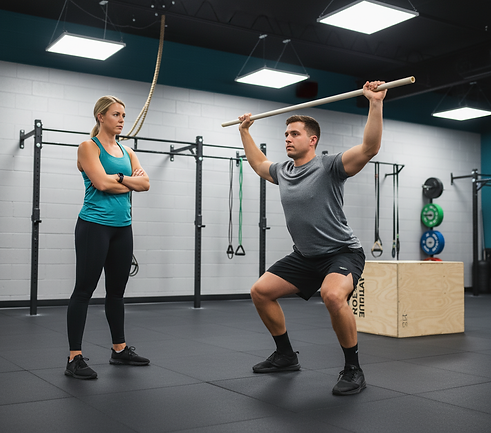
STAYING AHEAD OF THE CURVE
Staying Ahead of a Joint That Depends on You
Resolving your current shoulder pain is only half of the work. The other half is making sure it does not return the next time your training gets harder, your posture slips, or life just asks more of a joint that was built for range, not stability.
Keep training the rotator cuff after symptoms fade: because the shoulder relies on small stabilizing muscles rather than bone and cartilage for support, they need direct, ongoing strength work long after pain resolves, not just general upper body training.
Balance pushing and pulling in your programming: training heavy on pressing movements without matching pulling and rotator cuff work creates the exact imbalance that overloads the shoulder over time.
Mind your scapular control, not just the shoulder itself: a shoulder blade that does not move well changes the mechanics of everything downstream. Ongoing scapular stability work protects the joint from compensating for problems elsewhere.
Progress overhead volume deliberately: sudden increases in overhead training, whether from a new training cycle, a new sport season, or a golf trip, are one of the most common triggers for shoulder flare-ups. Build that volume the way you would build any other capacity, gradually.
Address the posture that is actually loading your shoulder: hours of rounded, forward posture at a desk changes the space your rotator cuff tendons move through.
Counterbalancing that posture is part of long-term shoulder health, not a separate issue.
"
“Willis was great at addressing the root cause of my shoulder pain. The educational aspect of the treatment sessions in addition to the hands-on approach was great. Implementing what Willis taught me in the clinic to my training has helped me reach my full potential in the gym and enjoy training pain-free. 10/10 recommend EVO!”
Colton Shirley EVO Performance Therapy Client
WHEN TO SEEK CARE
Some shoulder soreness settles down on its own within a few days. But certain signs suggest it is time for a real evaluation rather than more waiting.
-
Pain or weakness that makes it hard to lift your arm away from your body
-
Night pain that consistently interrupts sleep, regardless of position
-
A shoulder that feels like it might slip, shift, or give out
-
Ongoing use of your other arm to compensate for basic tasks like reaching or lifting
-
Stiffness that keeps reducing your range of motion rather than improving over a few weeks
-
A previous dislocation or shoulder injury that never fully resolved
If you experienced a significant trauma, a visible deformity, or sudden, severe weakness following an injury, seek medical evaluation right away. For the gradual, nagging, or recurring shoulder pain most active adults experience, a proper movement assessment is where the real answer starts.
Signs Your Shoulder Needs More Than Time

FREQUENTLY ASKED QUESTIONS
Common Questions About Shoulder Pain Treatment
Do I need physical therapy for shoulder pain, or will it resolve on its own?
Minor soreness from a hard workout or an awkward sleeping position often settles within a few days. Shoulder pain that lingers past two or three weeks, interrupts your sleep, or keeps you from reaching or lifting the way you used to is telling you the surrounding muscles are not currently able to support the joint. The longer that goes unaddressed, the more compensation patterns tend to build on top of it.
Why does my shoulder hurt more at night than during the day?
This is one of the most common questions we hear, and it has a real physiological explanation. Lying on the shoulder compresses already irritated structures, and blood flow to the area decreases at rest, both of which tend to make tendon-related pain feel worse overnight. It is not a sign of a more serious injury. It is a sign the shoulder needs more strength and support than it currently has.
Can I keep training or lifting with shoulder pain?
In many cases, yes, with the right modifications. The shoulder responds well to appropriately loaded exercise, and complete rest often leaves the surrounding muscles weaker, which can make the joint more vulnerable once you return to full training. The better question is which movements to modify, load, or temporarily set aside while the true deficit gets addressed.
What actually causes shoulder pain in active adults?
Far more often than people expect, the shoulder is doing its best to stabilize itself without enough help from the surrounding muscles. Rotator cuff weakness, poor scapular control, posture that narrows the space your tendons move through, and sudden jumps in overhead training volume are common underlying drivers, regardless of which specific motion first triggered the pain.
Is shoulder pain from CrossFit, swimming, or overhead lifting a sign I should stop?
Almost never entirely. These activities place real, repeated demand on a joint that depends on smaller stabilizing muscles to handle heavy or repetitive overhead load. Most athletes return to full training once the underlying strength and control gap has been closed, often with better mechanics than before the pain started.
What if I already had shoulder surgery? Can performance therapy still help?
Yes. Whether you are early in post-surgical recovery or had surgery years ago and never fully regained your strength or confidence, a movement assessment can identify what is still limiting you. Compensation patterns often persist long after a surgical shoulder has technically healed, and those patterns are addressable.
EVO PERFORMANCE THERAPY
Stop Working Around It.
Start Building Around It.
Shoulder pain does not have to mean permanently modified workouts, avoided sleep positions, or a growing list of things you used to do without thinking. With the right assessment, a plan built around real strength and stability, and a team that understands what you are training for, most active adults get back to lifting, reaching, and sleeping without hesitation.
Schedule your Performance Therapy evaluation today and find out what your shoulder actually needs to stop hurting and start holding its own.
Ready To Get Started?
Schedule a Performance Therapy Evaluation
Learn How EVO Helps Active Individuals Return to the Activities They Love
615-266-5599 | evoperformancetherapy.com