_ed.png)

You rested. It came back. You stretched every morning for a month. It came back. You cut squats and deadlifts out of your routine entirely, just to be safe. It still shows up doing something as small as picking up a laundry basket.
If that cycle sounds familiar, you are not broken, and you are not fragile. Your back pain keeps returning because rest and stretching were never going to fix what is actually driving it. They can calm things down temporarily. They cannot rebuild the strength, spinal endurance, and movement coordination your back needs to handle real life without flaring up again.
At EVO Performance Therapy, we treat back pain as a capacity problem, not a fragility problem. Your spine is not something to be protected indefinitely. It is something to be prepared. That distinction changes everything about how treatment works and how long the results actually last.
Your back is not fragile.
It is underprepared for what you are asking it to do.
Schedule a Performance Therapy Evaluation | Get Back to the Activities You Love

If your MRI came back essentially normal, why does it still hurt every time you sit for too long?
This is one of the most common and most disorienting experiences for people dealing with back pain. The scan looks fine. The doctor says there is nothing seriously wrong. And yet the pain is real, it is limiting, and it keeps coming back.
Here is what most people are never told: imaging and pain do not correlate nearly as closely as we assume. Studies on people with zero back pain regularly find disc bulges, degeneration, and other changes on their scans. Meanwhile, people with significant pain often have imaging that looks essentially unremarkable. Structure alone does not explain symptoms.
What explains symptoms far more often is capacity. How much load can your spine, hips, and core currently tolerate before they start sending warning signals? A sudden jump in training volume, weeks of sitting at a desk without enough counterbalancing movement, a strength deficit in the hips or core that has been quietly shifting more work onto your low back, or simply asking your spine to do something it has not been prepared for. Any of these can be the actual driver, regardless of what a scan shows.
This is the foundation of how we treat back pain at EVO. We are not chasing a diagnosis on a piece of paper. We are identifying what your body is actually struggling to handle right now, and building the capacity to handle it.
UNDERSTANDING BACK PAIN
Why Your Back May Actually Hurt


However Your Back Pain Shows Up,
We Have Likely Treated It.
Low Back Pain
Acute and Chronic
Whether it came on suddenly or has been a background presence for months, low back pain almost always responds to the same core question: what movements and loads has your back stopped tolerating, and how do we rebuild that tolerance safely and progressively?
Herniated Disc and Disc-Related Pain
Disc Irritation and Radiating Symptoms
A disc issue on imaging does not automatically mean surgery or permanent limitation. The majority of disc-related pain responds well to a progressive, movement-based rehabilitation approach that reduces irritation and rebuilds the strength needed to support the spine going forward.
COMMON BACK CONDITIONS WE TREAT
Back pain is not one condition. It shows up differently depending on what is driving it, and each presentation calls for its own approach.
Sciatica
Nerve-Related Leg Pain, Tingling, and Numbness
When pain, tingling, or numbness travels down the leg, it usually means something in the low back or hip is irritating or compressing a nerve. Identifying the movement and postural factors contributing to that irritation is often the fastest path to relief.
SI Joint and Pelvic-Related Pain
Hip and Pelvis Contributions
Pain around the SI joint or the base of the spine often has more to do with hip strength, pelvic stability, and movement coordination than with the joint itself. Addressing the surrounding structure is usually the key to lasting relief.
Athletic Back Injuries
Weightlifting, Gymnastics, and Sport-Related Strain
The demands of heavy lifting, repetitive spinal loading, and explosive movement create a different injury profile than everyday back pain. Getting back to your sport requires treatment that understands those specific demands, not a generic rehab protocol.

HOW PERFORMANCE THERAPY HELPS
Building a Back That Can Handle Your Life

A Movement Based Assessment
Every plan starts with a full evaluation of how your spine and hips move, how strong your core actually is under load, and how your body coordinates movement during the activities that matter to you, whether that is a deadlift, a long run, or simply a full day of work. This tells us why your back has been asked to absorb more than it can currently handle.
Building Strength and Capacity, Not Just Flexibility
Stretching feels good in the moment, but a stiff back is rarely the actual problem. Recovery is built on progressively improving core strength, hip strength, spinal endurance, and lifting capacity, so your back can tolerate real load without breaking down. The goal is never to avoid loading your spine forever. It is to rebuild your ability to handle it.
Restoring Movement Confidence
Back pain often leaves people afraid of specific movements long after the tissue itself has healed. Bending, twisting, lifting from the floor: these become things to avoid rather than things to do well. Part of your plan is rebuilding trust in those movements through appropriate, well-progressed exposure, so fear stops being the thing limiting you.

Performance therapy for back pain at EVO is built around one central goal: not just calming your symptoms down, but rebuilding the capacity that keeps them from coming back.
"
“EVO is hands down the best. I started going for a specific back injury that was making sitting and standing difficult. After just a few visits I was moving normally again and a few months into treatment I'm full speed ahead at the gym. The best part for me is that the treatment plan isn't just about fixing the symptom. We are diving into the root cause and working to correct deficiencies that will prevent the problem from returning. I can already tell a difference not only in the gym but in everyday life, including less back and neck pain sitting at my desk all day.”
Bree T. EVO Performance Therapy Client

WHAT TO EXPECT
Your First Few Weeks at EVO
Every client begins with a thorough initial evaluation covering your pain history, the specific activities that aggravate your symptoms, a full movement assessment, and the personal goals you are working toward, whether that is getting back under a barbell or simply picking up your kids without hesitation.
From there, we build a personalized plan combining targeted exercise programming, mobility work where it is genuinely needed, progressive strength training, hands-on manual therapy when it will accelerate your results, and activity-specific training that mirrors what you actually need your back to do.
Success is measured in real terms: returning to lifting, running comfortably again, training consistently without flare-ups, and moving through your day with confidence instead of caution.
TRAINING WITH BACK PAIN
Can You Exercise With Back Pain?
Is bed rest actually the safest option when your back is flaring up?
For the first day or two after an acute flare-up, some reduced activity can help. Beyond that, extended rest tends to work against you. Your spine relies on the strength and endurance of the muscles surrounding it, and those muscles weaken quickly with inactivity, which often leaves your back less prepared for daily demands than it was before you started resting.
The more useful question is not whether to exercise, but which movements to modify, which to keep, and how to progress load intelligently from where you are right now.
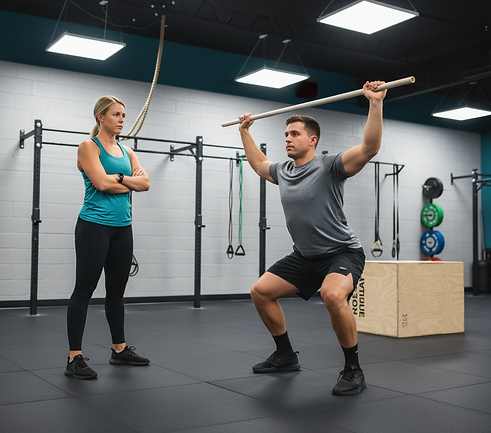
Deadlifting with back pain, squatting with back pain, running with back pain: in many cases, these remain possible with the right adjustments to load, range, and technique while your capacity rebuilds underneath them.
This is where a proper assessment matters most.
Guessing at modifications on your own is how people either push through pain that needed attention, or avoid movements that were actually safe and necessary for recovery.
"
“I worked with Dr. Willis Graves over ten sessions after going in for back pain. He helped me address the pain quickly, but more importantly, he gave me the skills and knowledge to manage it long term. Once I felt confident implementing what I needed on my own, he was willing and able to shift the focus from rehab to performance, which I really appreciated. I came in hoping to fix my back and left with better squat, deadlift, and running form as well. I actually hit a squat PR today, just three months after feeling like I might have to take squats out of my routine entirely.”
Sean N. EVO Performance Therapy Client
LONG-TERM PREVENTION
Preventing Back Pain From Coming Back
-
Finish building the strength, not just the pain relief: Symptoms often resolve well before the muscles supporting your spine have actually been rebuilt. Long-term resilience means training past the point where you simply feel okay.
-
Maintain mobility where your spine and hips actually need it: A back that only moves well on a good day is not a back that has been prepared. We keep mobility work in the plan even after strength becomes the primary focus.
-
Progress your training load with intention: Sudden jumps in weight, mileage, or intensity are one of the most common triggers for back pain flare-ups. Learning to progress load without outpacing your spine's current capacity is a skill worth building deliberately.
-
Build real recovery habits, not just good intentions: Sleep, stress, and how you manage recovery between hard training sessions all directly affect how much your back can tolerate before symptoms return. We help you understand what your body actually needs, not just what sounds right.
-
Prepare you`r spine for what you are actually asking of it: A desk job that involves weekend deadlifting places very different demands on your back than a physically active job does. Your prevention plan should reflect the specific mix of demands in your real life, not a generic set of core exercises.
Feeling better is not the same as being resilient. Back pain has a well-earned reputation for returning, and it usually returns for the same reason it started: the underlying capacity gap was never fully closed.
WHEN TO SEEK CARE
Minor stiffness or a one-off tweak often settles down within a few days on its own. But certain patterns are a clear sign that it is time for a real evaluation instead of another round of rest and hoping.
-
Pain that has lasted more than a few weeks without meaningful improvement
-
Flare-ups that keep recurring, even after periods of feeling fine
-
Difficulty performing exercises or lifts you used to do without issue
-
Noticeable loss of strength, mobility, or control since the pain started
-
Hesitation or fear around bending, lifting, or twisting, even Symptoms that are affecting your work, your training, or your daily quality of life
If you are experiencing numbness, tingling, or weakness that is worsening, or any loss of bladder or bowel control alongside back pain, seek medical evaluation right away. These are signs that warrant prompt attention beyond a standard movement assessment.
For everything short of that, a real evaluation is where the answer starts, not another week of waiting to see if it goes away on its own.
When Should You See a Physical Therapist for Back Pain?

Recovery is not the destination.
It is the starting point for what comes next.
FREQUENTLY ASKED QUESTIONS
Common Questions About Back Pain Treatment
Do I need physical therapy for back pain, or should I just rest?
Rest has a role for the first day or two after a significant flare-up, but prolonged rest is one of the most common reasons back pain becomes a recurring problem instead of a one-time event. Extended inactivity weakens the exact muscles your spine relies on for support. If your back pain has lasted more than a couple of weeks, keeps returning, or is limiting what you can do, an evaluation will tell you far more than another week on the couch.
Can I keep lifting, running, or training with back pain?
In most cases, yes, with the right modifications. Stopping entirely often does more harm than good, because it deconditions the muscles that protect your spine and can make you more fearful of movements that are actually safe to load. The real question is not whether to keep training, but which movements, at what load, and with what adjustments right now. That is what a movement assessment is built to answer.
My MRI came back with a bulging disc, but a friend has the same thing with no pain at all. What does that mean?
It means imaging alone rarely tells the whole story, and you are far from alone in that experience. Research consistently shows that disc bulges, degeneration, and other imaging findings are extremely common in people with zero back pain. Your symptoms are driven by how your spine, hips, and core are functioning together under real load, which is exactly what imaging cannot show you and a movement assessment can.
Why does my back pain keep coming back even after it feels resolved?
This is one of the most common patterns we see, and it almost always means the underlying capacity issue was never fully addressed. Pain can resolve well before the muscles, mobility, and movement patterns that led to it have actually been rebuilt. If your plan stopped the moment you felt better instead of continuing until your spine could handle real demands again, the same triggers will likely bring it back.
Is back pain from lifting a sign that I should stop lifting altogether?
Almost never. Back pain during or after lifting is far more often a sign that your technique, load progression, or supporting strength needs attention than a sign that lifting itself is the problem. Most lifters who work through a proper rehabilitation and strength progression return to the same lifts, often with better mechanics and more confidence than before the pain started.
How is this different from the physical therapy I have already tried?
A lot of back pain care stops at pain relief: some stretching, some heat, maybe a few generic core exercises, and a discharge once symptoms calm down. Performance therapy at EVO continues past that point. We build the strength, spinal endurance, and movement confidence needed to actually return to lifting, running, or your sport, and we stay engaged with your training until you are back to full activity, not just out of pain.
EVO PERFORMANCE THERAPY
Your Back Is Not the Enemy. Build It Up.
Back pain does not have to mean a permanently modified life. With the right assessment, a plan built around real capacity instead of just symptom relief, and a team that understands what you are training for, most active adults get back to lifting, running, and living without the hesitation back pain leaves behind.
Schedule your Performance Therapy evaluation today and find out what your back actually needs to stop hurting and start performing again.
READY TO GET STARTED?
Schedule a Performance Therapy Evaluation | Get Back to the Activities You Love
615-266-5599 | evoperformancetherapy.com